VALLETTA, Malta ― The time is ripe to employ new technologies for a "seamless travel" experience, said industry leaders attending last week's World Travel and Tourism Council Summit 2026 in Valletta, Malta.
"We don't have to choose between security and seamless travel. We can have both," Gloria Guevara, chief executive officer of the WTTC and Mexico's former culture minister, said at the summit Thursday.
"We want to create a world where travel is seamless, ... where countries unlock their full potential," said Guevara.
According to the latest report by the WTTC named "Travel & Tourism in Europe: A Deep Dive Into Growth, Outlook, and Policy," enhancing secure and seamless travel is one of the eight strategic priorities for Europe to strengthen its position as a competitive tourist destination.
The report urged Europe to accelerate the rollout of digital Schengen visas for European travelers to another EU country, replacing the current paper-based system. It also called for an EU-wide system to allow travelers who completed pre-arrival vetting to use automated immigration checkpoints. The initiative could ride the tailwinds of the EU-wide cooperation to create a framework for biometric data processing.
"Making the traveler journey more seamless without compromising security will not only enhance traveler satisfaction but also strengthen Europe’s competitiveness, which is an essential factor in maintaining its position as a leading global destination," stated the report, which was unveiled at the Malta summit.
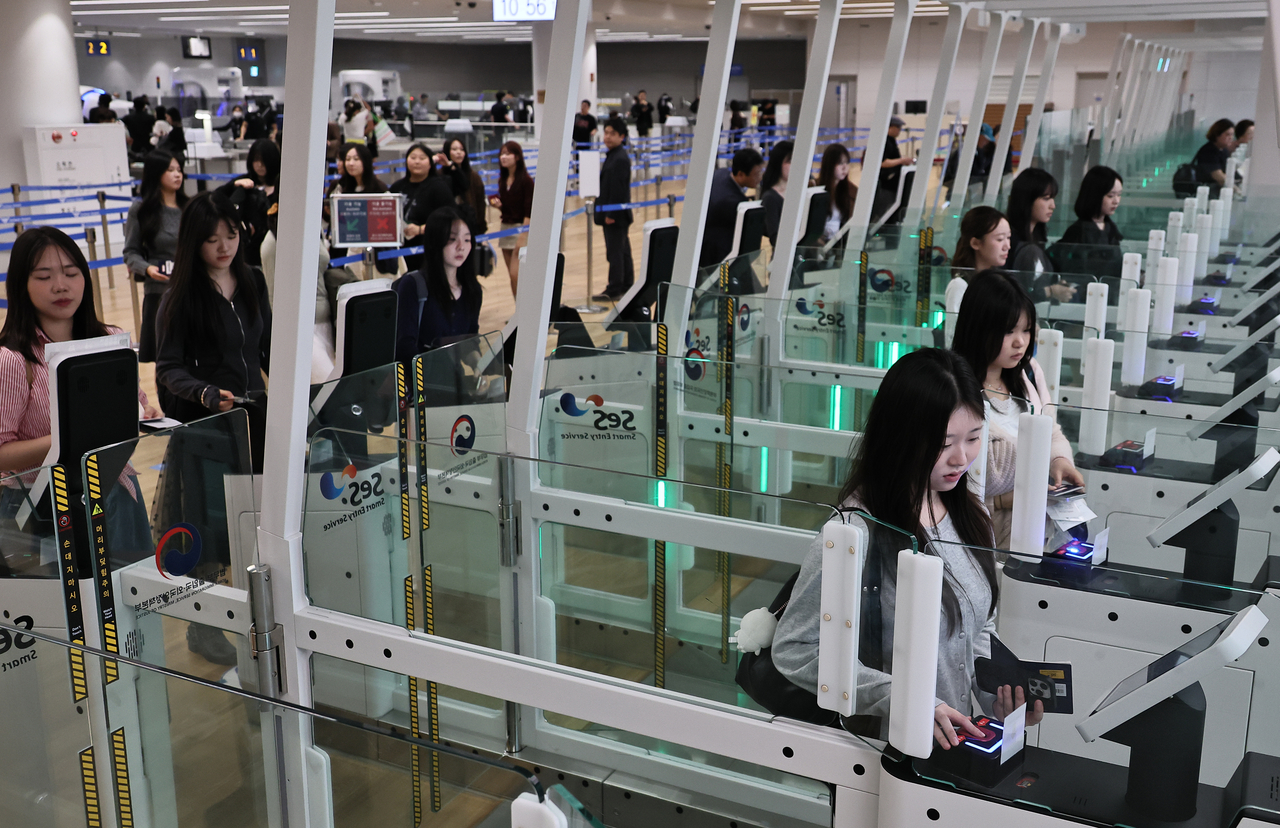
South Korea is on a path to adopting automated entry for its foreign travelers.
According to the Ministry of Justice, travelers aged 17 or over from 42 countries are eligible to enter South Korea through what is called the "smart entry system" as of March.
Those visiting South Korea through an airport can use automated immigration checkpoints where they scan their passport and registered biometric data such as a fingerprint.
Us of the automated system appears to be expanding. Seoul estimated earlier in October that, between November last year and August, 2.85 million foreign tourists have entered South Korea through automated gates, up threefold from 912,619 throughout 2024.

Travel industry leaders at the WTTC summit echoed the view that the paper-based system will inevitably be replaced by seamless travel systems.
Dubai Airport CEO Paul Griffiths said passports will no longer be necessary five years from now. Diane Sabatino, executive assistant commissioner at US Customs and Border Protection, put the timeframe at "three to five years."
Refuting privacy concerns about allowing border authorities to handle personal information, Griffiths said, "There are only two things (authorities) need to know. Am I who I say I am, and should I be here at this time? In other words, if we have simply a central repository that sits somewhere probably in the jurisdiction or in our residential country, we just need to be able to ask those two questions from that central source."
Griffiths added, "If we're entrusting banks with your (remittances), why are we not entrusting travel organizations with that ability to just share its token and to verify identity?"
Another expert agreed that technology to enable the transformation is already here, and that efforts to improve the travel experience require the willingness of parties concerned.
"Technology is not the problem. The problem is about governance, is about coordination, is about interoperability of the various systems,” said Andrea Alori, a partner at Bain & Company.
“Technology can help us a lot, but also the willingness of (both the public sector and the private sector) can make this change.”
consnow@heraldcorp.com